Reinforcement learning · Game systems
An Oware engine and a ladder of learning agents
A rules-correct Abapa engine became a controlled arena for Minimax, DQN, PPO, and AlphaZero-lite—and a record of why some agents failed more instructively than others.
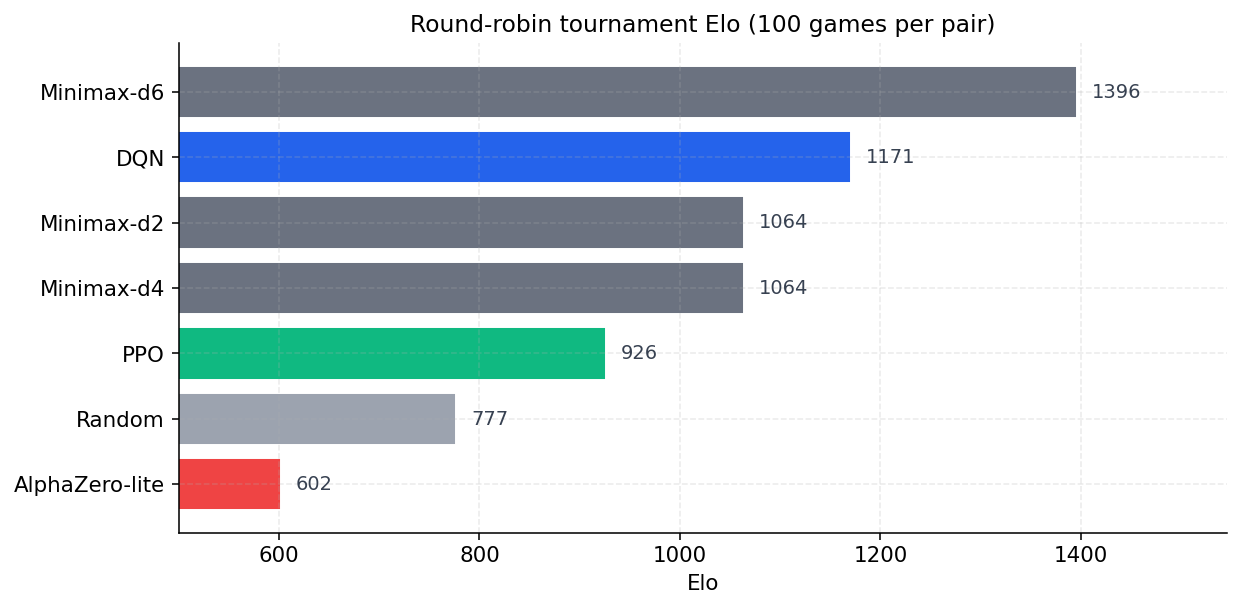
- 7agents evaluated
- Search, learned, random, and self-play policies.
- 100games per pairing
- A complete round-robin comparison.
- 1,171DQN Elo
- Second only to the depth-six Minimax baseline.
01 · Finding
Make the rules trustworthy first
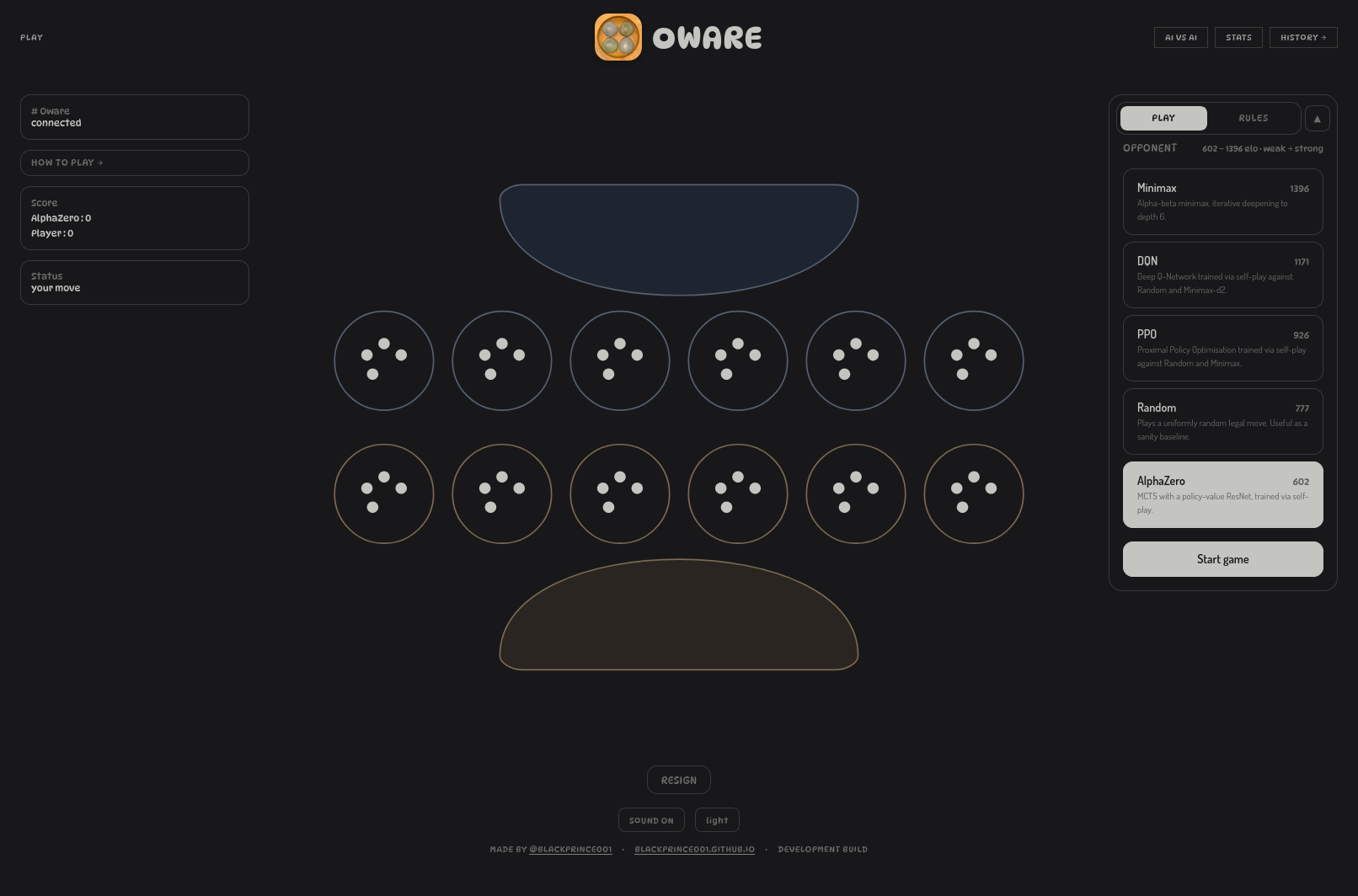
The engine models Abapa as immutable state: twelve houses, two stores, the side to move, and capture history. Starvation, source-house skipping, and backwards capture are resolved before an agent sees the position.
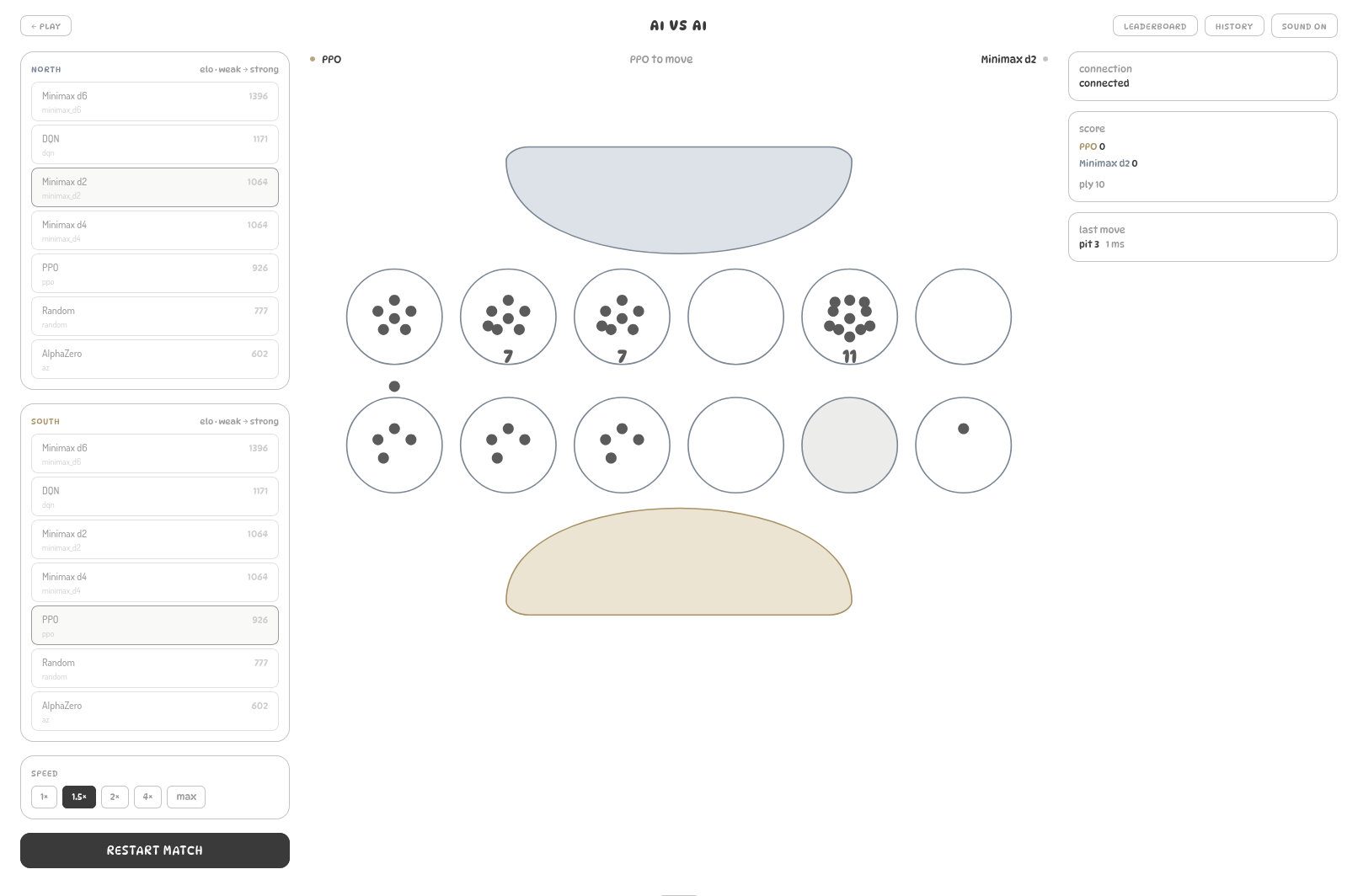
That narrow contract lets every policy share the same server, tournament, and evaluation surface. A search baseline and a neural agent differ only in how they choose a legal move.
02 · Finding
Let each family fail honestly
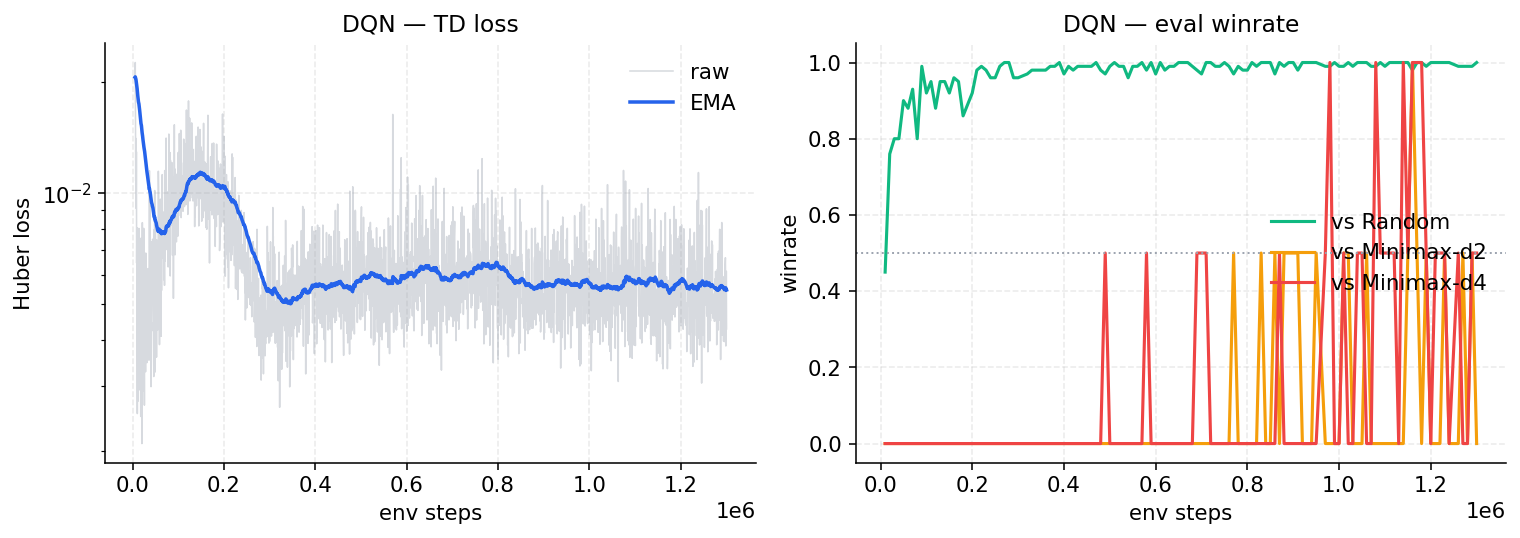
DQN learned efficiently but forgot an early curriculum opponent. PPO preserved healthy entropy while its league became too inward-facing. AlphaZero-lite stopped before its replay buffer and value head crossed a useful competence threshold.
The shared evaluation protocol makes those diagnoses comparable. Smooth loss curves are evidence, but they are not treated as proof of playing strength.
03 · Finding
Settle the hierarchy on the board
A 100-game-per-pair round robin turns model claims into outcomes. Minimax-d6 leads, DQN finishes second, PPO trails it by 245 Elo, and the under-trained AlphaZero-lite lands below Random.
The ranking is not a victory lap. It is the compact result of the system: reproducible opponents, bounded inference, and enough evidence to say what should be trained differently next.